




Skip to content

When to see an orthodontist

When to start treatment for children, teenagers, and adults — and why timing matters.

guide-when-to-see

Overview

Orthodontic treatment occurs at specific stages of your dental journey.

In growing children, baby teeth will first start falling out at the age of 6. At this stage, as the adult incisor first start erupting, our orthodontists will be able to identify any developing problems. Developing problems can include delayed eruption of adult teeth, jaw size problems, or dental arch crowding. Early intervention of such issues can eliminate the need for treatment later or significantly reduce the complexity of treatment later.

In the young teenager, aged 12+, all baby teeth have gone and the all adult teeth have erupted including the back molars. This is commonly a time when brace treatment commences. Teens are usually growing rapidly at this stage, aiding tooth and jaw movement with braces.

In adults, a dentist will advise whether orthodontic treatment should be considered. Your orthodontist will guide you through pros/cons & considerations for adult orthodontic treatment, including gum health, strength of teeth and the state of jaw bone.

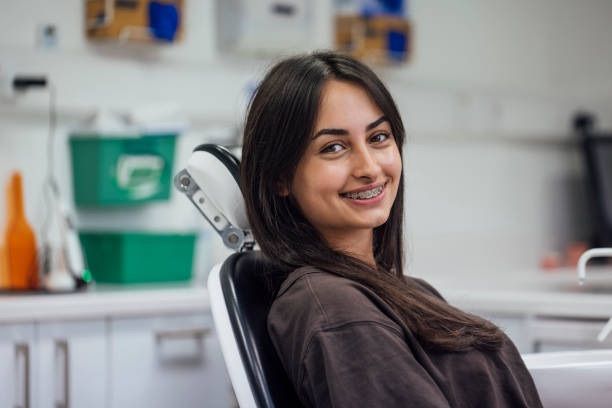
When to see an orthodontist?

If you are thinking about getting an orthodontic treatment, then you probably have one very important question. When do I need to see an orthodontist in Canberra? There are several ways that this question can be answered. Any time that you have a question about your bite and/or the way that your teeth are aligned, you should see one of the orthodontists in Canberra.

For example, if you are having problems speaking, chewing and biting because some of your teeth are misplaced, crowded or protruding, then you will need to consult with one of the leading Canberra orthodontists Orthoclinic. Orthodontists in Canberra such as Orthoclinic have the special training and skills needed to diagnose and treat the problem.

Conditions

There are other conditions that warrant a trip to an orthodontist in Canberra. Teeth grinding, mouth breathing and inability to close your mouth comfortably are some of the conditions that may require orthodontic treatment. Additionally, Canberra orthodontists can correct tooth abnormalities that are caused by facial asymmetry or imbalance.

Children are advised to see an orthodontist by the age of seven. There are two reasons that children need to see an orthodontist. Orthodontist can determine whether a child has enough room in his or her mouth to accommodate the permanent teeth. It is also a lot easier to correct tooth problems early.

Children who receive orthodontic care early may require shorter treatment times. Keep in mind that just because a child receives an examination from an orthodontist does not mean that he or she will receive treatment right away. In fact, the vast majority of children do not receive orthodontic treatment until they are at least nine years-old.


Who can benefit?

It is important to note that orthodontic care is not just for children. More and more adults are choosing to get orthodontic treatment. Many adults who receive orthodontic care feel self-conscious about their smile. Orthodontic treatment can improve one’s smile, which can increase one’s confidence.

Well-aligned teeth not only improve appearance, but they can also improve oral health. It is easier to clean the teeth when they are lined up properly. This can reduce one’s chances of developing gum disease and cavities.

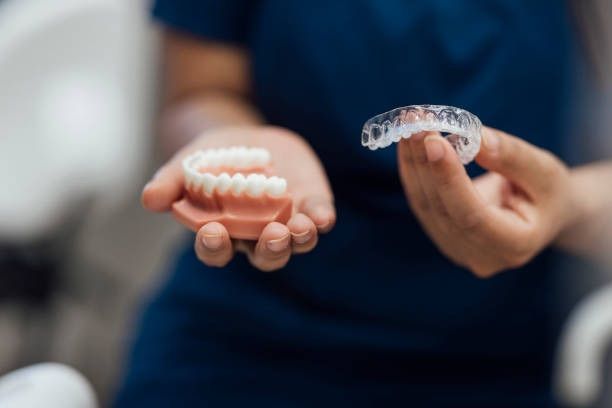
Anyone can benefit from orthodontic treatment, regardless of his or her age. Non-compliance is one of the things that reduces the effectiveness of orthodontic treatment, but this usually is not a problem in adults. There are also many types of braces that one can choose from, including lingual braces, ceramic braces and clear aligners.

Ready to learn more?

Book a consultation with a specialist orthodontist to talk through your options and the right treatment for you.

FAQs

Have a question about when to see an orthodontist?

  • Most children benefit from an assessment around age 7–8, when we can see how the jaw is developing.