




Skip to content

When should my child first see an orthodontist?

The short answer: around age 7. Here’s why early assessment matters, even if treatment can wait.

guide-child-first-visit

Overview

A child should see an orthodontist at age 7

At age 7, the adult teeth are starting to erupt and it is from this point that the orthodontist can spot subtle problems with jaw growth and erupting teeth while some baby teeth are still present. 

While your child’s teeth may appear to be straight, there could be a problem that only an orthodontist can detect. An orthodontic examination may reveal that your child’s bite is fine.  Or the orthodontist may identity a developing problem but recommend monitoring the child’s growth and development, and then if appropriate, begin treatment at the correct time.  In other cases, the orthodontist might find a problem that can benefit from early treatment.

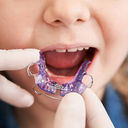
Early treatment may prevent or intercept more serious problems from developing and may make treatment at a later age shorter and less complicated.

If your child is older than 7, it is certainly not too late for an initial examination.  Our goal at Orthoclinic is to provide the most appropriate treatment at the most appropriate time.


Signs

Signs your child should seen an orthodontist

While all children can benefit from an early orthodontic evaluation, there are specific signs that indicate your child may be a candidate for orthodontic care:

  • Losing baby teeth prematurely: This may be a sign of cavities or trauma which can affect the eruption pattern of permanent teeth.
  • Protruding and overcrowded teeth: Teeth that stick out or appear crowded can impact your child’s oral health, aesthetics, and overall bite function.
  • Misalignment when biting: Your child’s teeth don’t meet when they bite together, such as an overbite, underbite, or crossbite.
  • Difficulty chewing or biting: This may indicate a bite problem or misalignment.
  • Snoring or breathing through the mouth: This could be a sign of potential breath or airway issues that an orthodontist can assess and address.
  • Thumb sucking: Prolonged thumb sucking can lead to dental issues, such as misalignment or protruding front teeth.
  • Family history of impacted or missing teeth: Early orthodontic evaluation is important if your family has a history of dental issues.


Ready to learn more?

Book a consultation with a specialist orthodontist to talk through your options and the right treatment for you.

FAQs

Have a question about when should my child first see an orthodontist??

  • Most children benefit from an assessment around age 7–8, when we can see how the jaw is developing.

  • We recommend a first assessment around age 7–8. Not every child needs early treatment, but this is the ideal age to spot developing issues so we can plan the simplest possible path — whether that’s acting now or simply monitoring growth.